From the first email to what the listings showed six weeks later. Every product screen in the film
is a demo account with invented members. The KD MMA numbers are real, dated and counted on the
listings themselves.
Read the transcript
0:00Hundreds served, a handful of reviews
A thriving business on the ground often looks like a ghost town on the map. The happy customers are already there. It is just that nobody asks them at the moment when saying something would be easy. And even a customer who left delighted stops at an empty text box. What do I say? How long should it be? So they close the tab. Meanwhile, the next customer is searching nearby. They look at how many reviews you have, and how recent the last one is, and they decide in seconds. Hundreds of people you served well, and a listing that shows a handful of reviews. That gap is what Review Machine closes.
0:40What Review Machine does
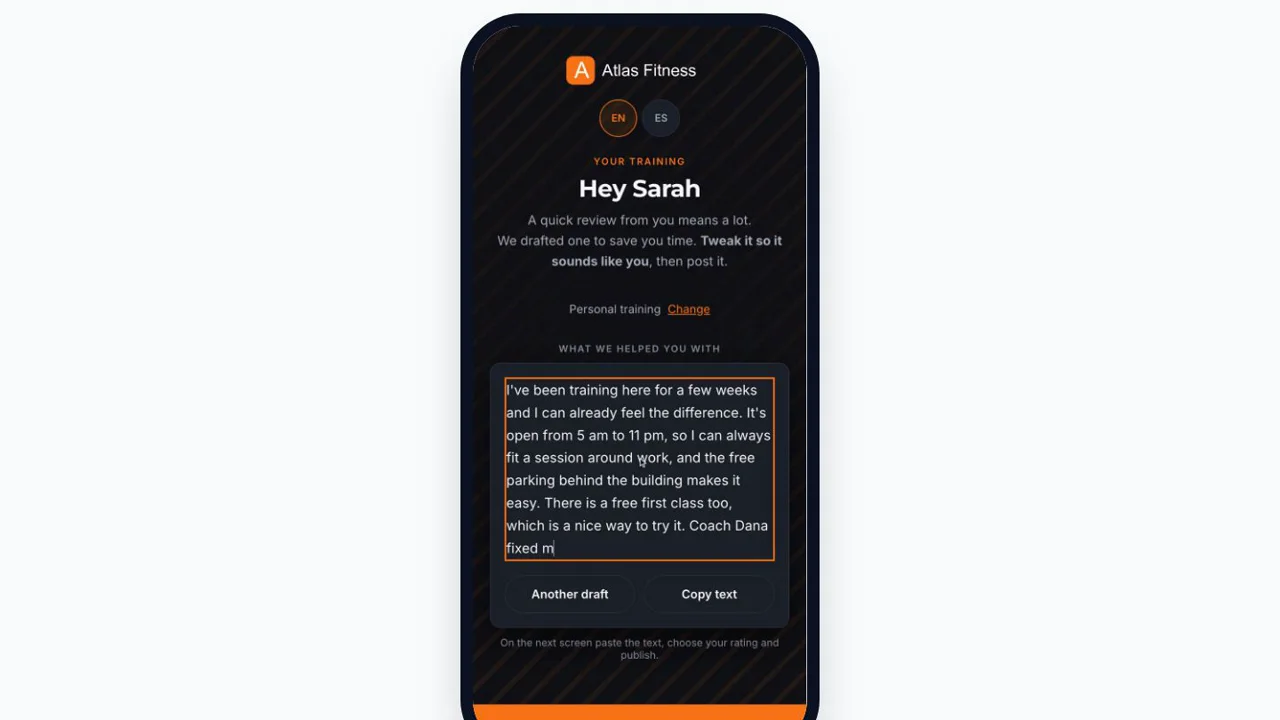
It does not ask strangers, and it does not write reviews. It invites the customers you already served, and it makes the first sentence easy. Here is how that looks in a demo account: Atlas Fitness, with invented members. It starts with one plain email. It comes from the business itself, in its own name and from its own address, not from us. Inside is a single personal link. The owner sees exactly what goes out. A short message, the customer's name, and the link. No stars, no discount, no request for a rating.
1:22A starting draft from a real visit
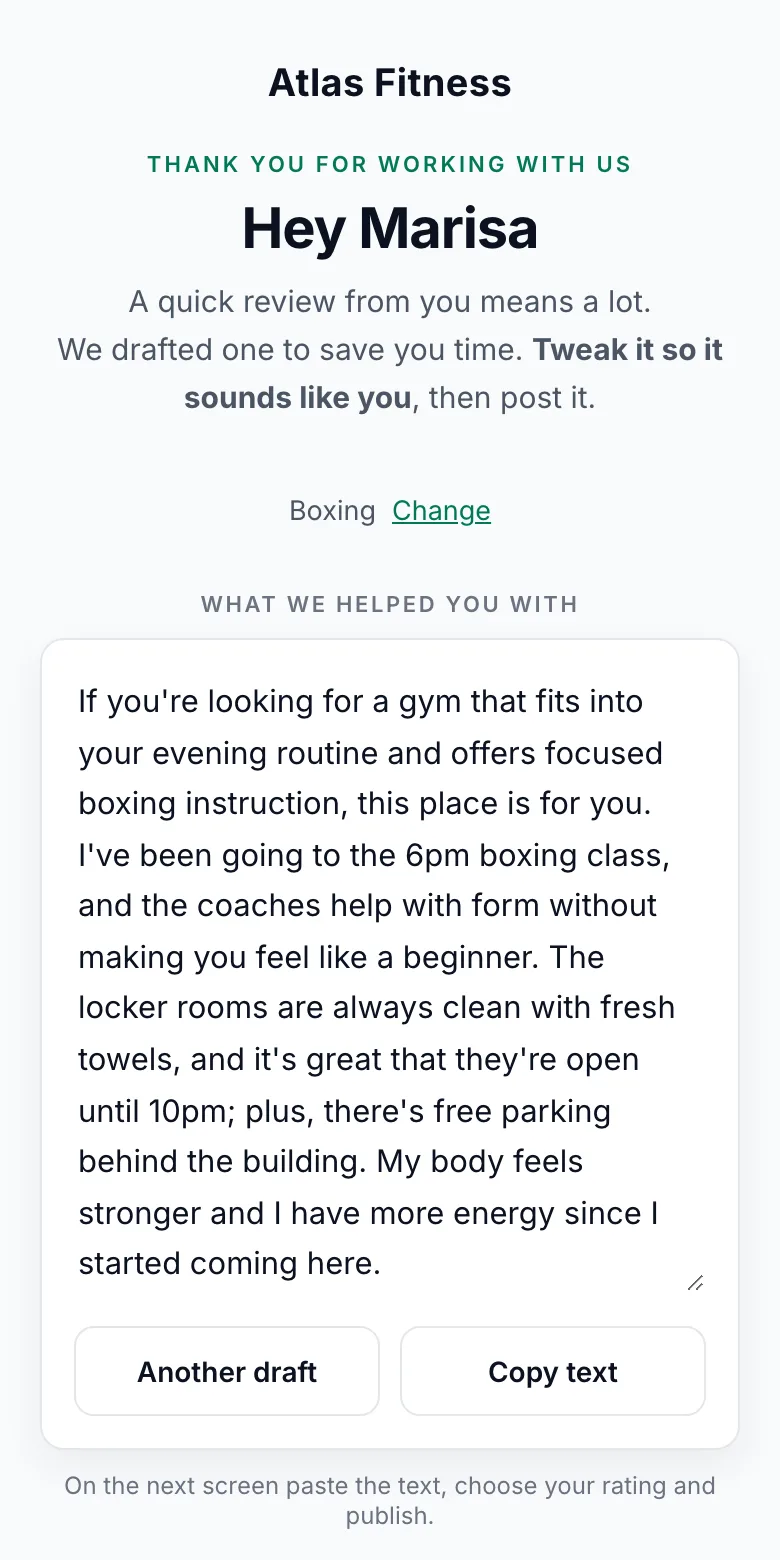
Behind that link is the step that changes everything: a starting draft, built from the facts of the customer's own visit. The class. The coach. The location. This is Marisa's page. The draft already mentions her 6 a.m. boxing class and her coach, Marcus. She swaps one word, adds a line of her own, and copies it. Then she opens Google, picks her own rating, and posts it from her own account. The drafts are not free-form. They use only the facts the business gave us, and every draft follows the same rules: no stock phrases, no superlative openings, nothing invented. The page carries the business's own look, and it speaks the customer's language. In Arabic, it reads right to left. A factual starting point removes the effort that usually stops a happy customer. The words are theirs to keep, change, or throw away.
2:25When a visit went wrong
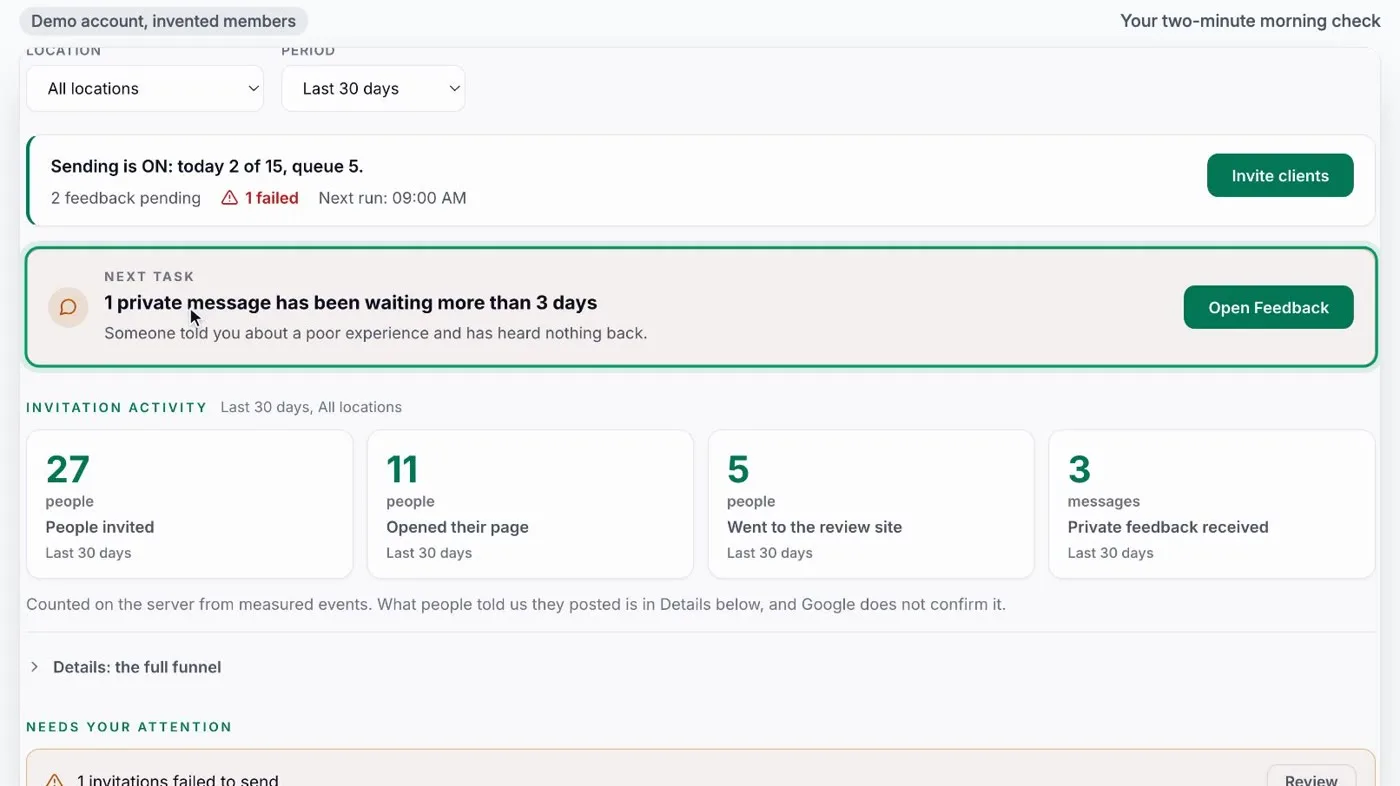
Of course, not every visit goes well. So the same page offers a private way to say so. If a class was moved and nobody said a word, the member can write that here instead. It goes straight to the team, privately. On the business side, it lands in the feedback inbox. Someone takes ownership, sets a status, and notes what was done. Here: called back, apologized, rebooked. This is a choice, not a block. The public listing stays open to everyone, and nothing stops an unhappy customer from posting there. The team simply gets a real chance to fix it.
3:20The owner's dashboard
Everything runs from one dashboard. The owner sees who was invited, who opened their page, who went on to the review site, and who wrote in privately. Every customer has a status: invited, opened, went to the platform, or told you they posted. Open one member, and you see their personal link and every step they took. Notice the split. What customers say they posted is kept apart from what the listing itself shows. The listing count is measured on the listing, and it is not credited to the invitations. Invitations go out in small daily waves, spread across business hours in the business's own time zone.
4:25Six checks before launch
And before the first one goes out, the system checks six things: the listing, the sender address, the templates, the domain, the drafts, and the contact list. If anything is missing, it does not start. It will not launch half ready.
4:49The rules
All of this is built around the platforms' own rules, and four of them are hard lines. The customer writes the text. The customer publishes it, from their own account. We have no way to publish a review. Nobody is paid for a review. No discounts, no gifts tied to posting. The invitation never mentions five stars. And every customer gets the same invitation, so nothing filters out the unhappy ones.
5:14A real campaign: KD MMA
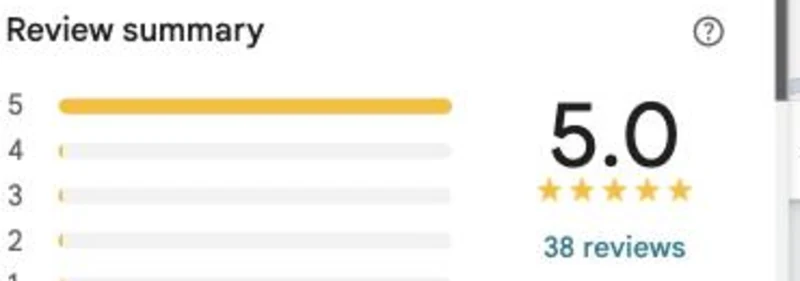
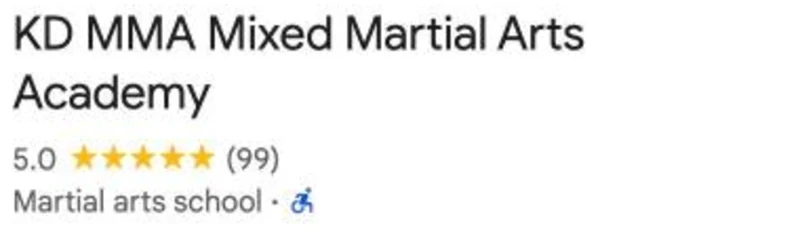
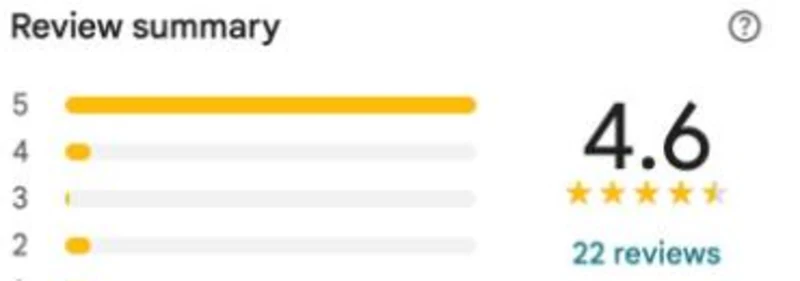
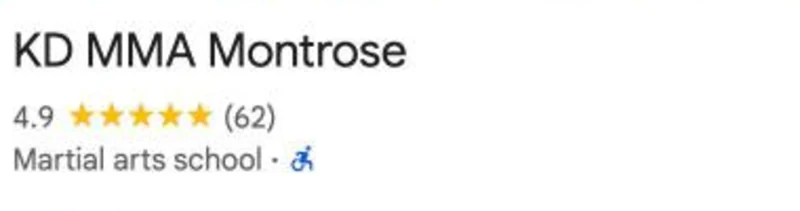
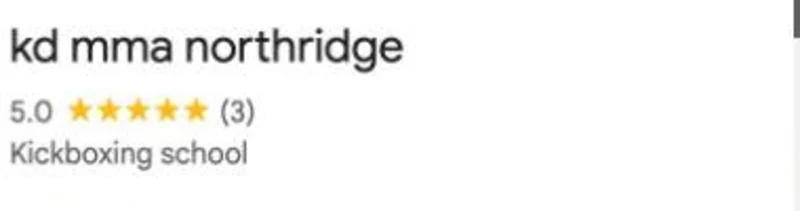
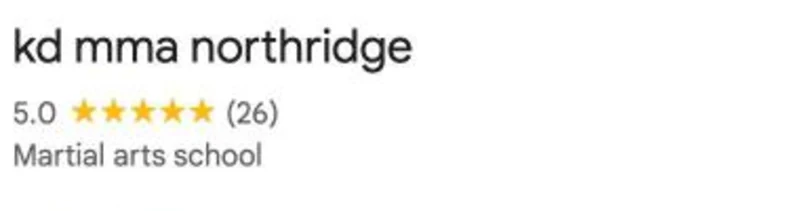
So what happens on a real listing? This is KD MMA, a martial arts school with three locations in the Los Angeles area. Northridge, on 4 August 2026, the day before the first invitation. Over 100 members on file. 3 reviews on Google. The newest one, six months old. 30 invitations a day went out from the club's own address, Monday to Friday, from 5 August to 9 September. On 17 September, we measured the listings again. Glendale went from 38 reviews to 99, and held its 5.0 rating. Northridge, from 3 to 26. Montrose, from 22 to 62, and its rating rose from 4.6 to 4.9. Across all three listings, 63 reviews became 187. A snapshot from 2 September shows where the friction really was. 105 people copied their draft. 103 of them went on to Google. Once people have the words in their hand, almost all of them take the next step. The hard part was never the click. It was the writing.
6:22What the numbers do not say
Now the boundaries. These are the counts the listings gained over the period, recorded with dated screenshots. They are not reviews we produced. Review platforms do not show anyone who pressed publish, so we cannot claim that every new review came from an invitation. And nobody can promise you a number, a rating, or a ranking. So we report what the listing shows, on two dates, and nothing more. No open rates. No conversion percentages.
6:51How to start
To start, you need one Google listing and the customer records you already have. Setup takes less than a week. Your most satisfied customers are already out there. The happy customers are already there. Review Machine gives them the first sentence.